Black Phoebe
Sayornis nigricans
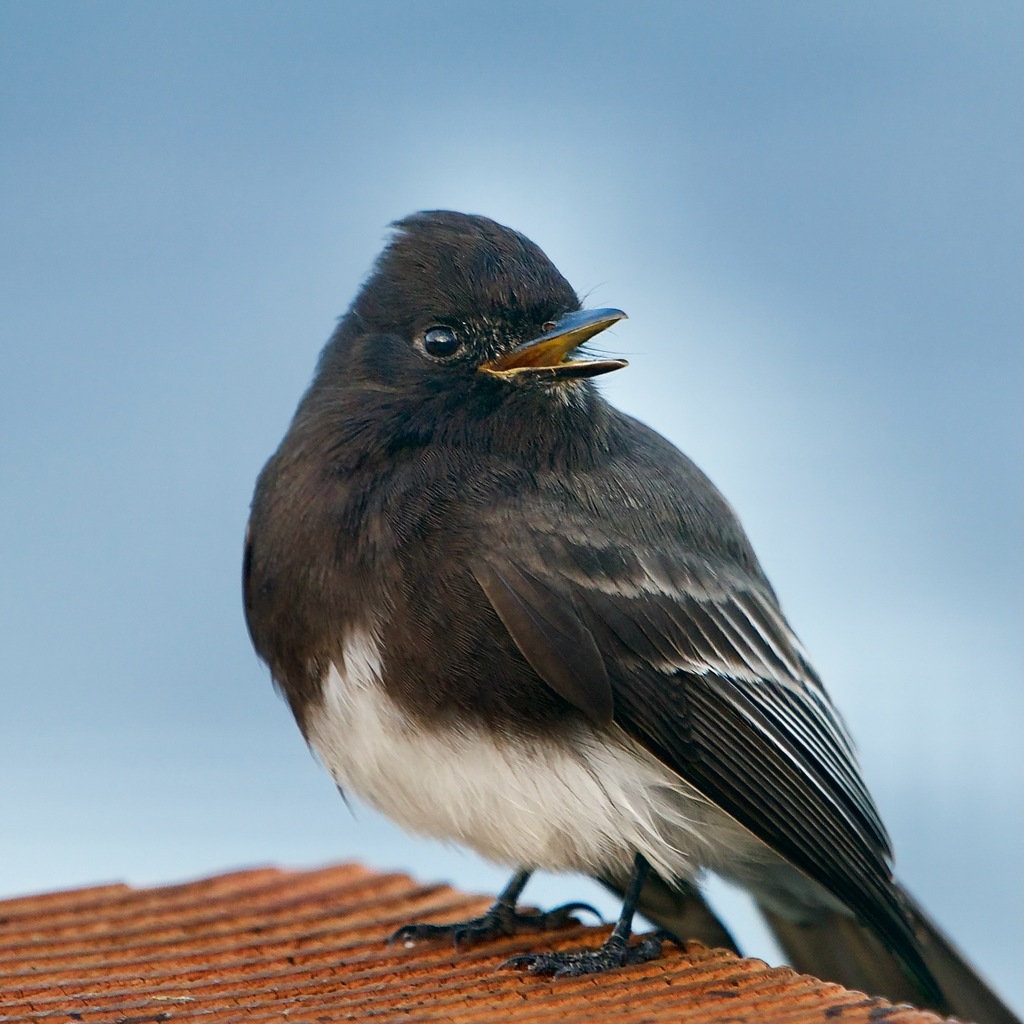
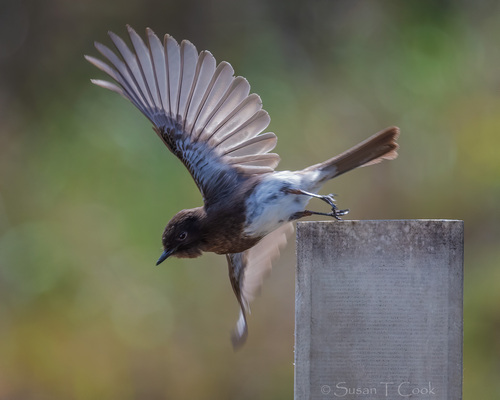
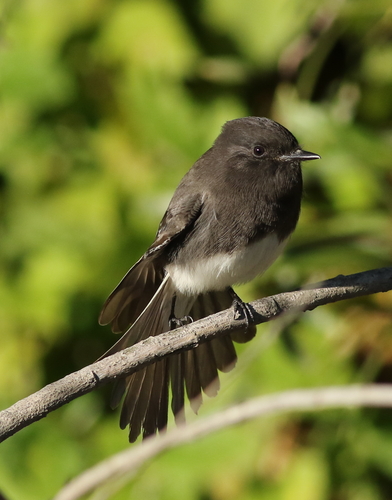
The black phoebe (Sayornis nigricans) is a passerine bird in the tyrant-flycatcher family. It breeds from southwest Oregon and California south through Central and South America. It occurs year-round throughout most of its range and migrates less than the other birds in its genus, though its northern populations are partially migratory. Six subspecies are commonly recognized, although two are occasionally combined as a separate species, the white-winged phoebe.
- Family
- Tyrannidae
- Order
- Passeriformes
- Status
- Native in California
- Records
- 63,075
- Peak
- Sep · Oct · Jan
Seasonality
When it shows up
November: good chance
Where to look
Places with recent records
Woodland, lakes, gardens, dunes
Golden Gate Park
A thousand-acre strip of forest, lakes and gardens running from the city grid to the Pacific — the backbone of San Francisco birding.
Forest, coastal scrub, shoreline
Presidio
A former military post turned national park site, with cypress groves, open grass and a shoreline that catches migrants.
Coastal cliff, scrub, cypress
Lands End
Wind-bent cypress and raw Pacific cliff at the city’s northwest corner — seabirds, raptors and spring wildflowers.
Tidal marsh, beach, open water
Crissy Field
A restored tidal marsh on the bay with the Golden Gate as a backdrop, loved by shorebirds, terns and wintering ducks.
Freshwater lake, reedbed, willow
Lake Merced
The city’s largest freshwater body, ringed by reeds and willows — a reliable stop for grebes, coots and migrating warblers.
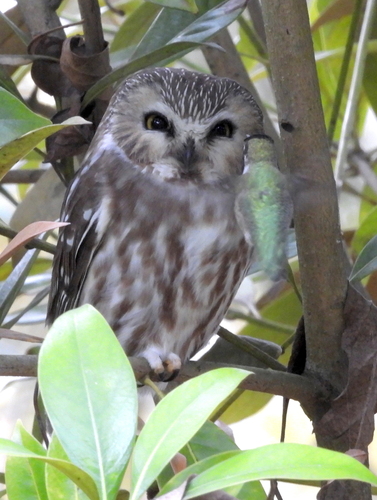
Easy to confuse with
Similar species in San Francisco
Questions
Black Phoebe in San Francisco
- Where can I see Black Phoebe in San Francisco?
- Black Phoebe has recent records at Golden Gate Park, Presidio, Lands End. Check each park page for habitat notes and access.
- When is the best time to see Black Phoebe in San Francisco?
- Records peak in September, October, January. In November, activity is rated “good chance”.
Sources
Occurrence counts and seasonality are derived from GBIF records (2018–2026). Description adapted from Wikipedia via iNaturalist, licensed CC BY-SA. Photo credits appear under each image. Native or introduced status comes from iNaturalist regional checklists. Species pages are for observation only — never disturb wildlife.