House Sparrow
Passer domesticus
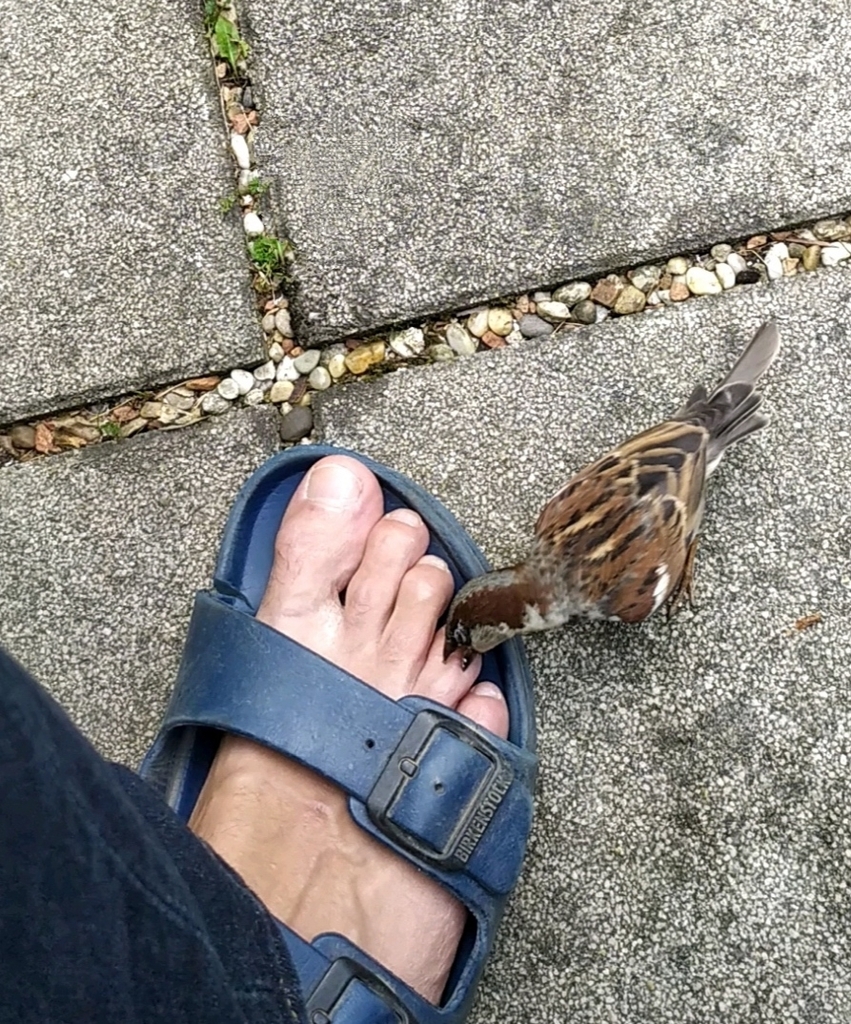
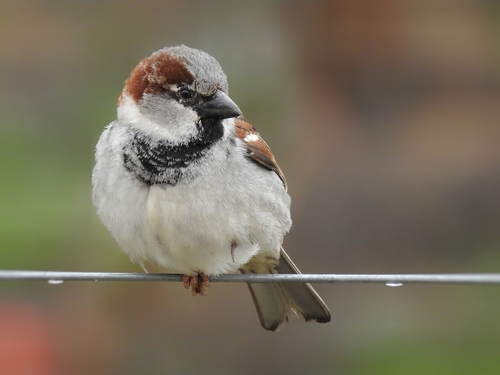
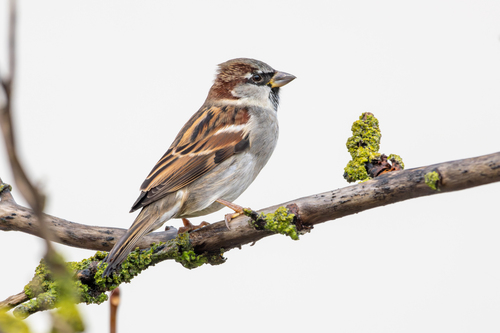
Stocky brown-and-grey sparrow. Males have a grey crown and black bib; females are plain buff with a pale eyebrow.
- Family
- Passeridae
- Order
- Passeriformes
- Size
- 14–16 cm long · 24–39 g
- Records
- 9,670
- Peak
- May · Apr · Jun
How to recognise
What you are looking at
Stocky brown-and-grey sparrow. Males have a grey crown and black bib; females are plain buff with a pale eyebrow.
Typical size: 14–16 cm long · 24–39 g
Habitat & behaviour
Where it lives
Streets, parks, station platforms and gardens — almost always near buildings.
How it behaves
Highly social and noisy; feeds on the ground in flocks and nests in cavities and crevices.
Diet & timing
What it eats
Seeds, grain, insects and scraps.
When to look
All day, especially morning feeding flocks.
Field tip
Listen for the flat cheep from hedges and pavement edges before you look.
Seasonality
When it shows up
November: possible
Where to look
Places with recent records
Formal garden, gravel, pond
Jardin des Tuileries
The long formal garden between the Louvre and Concorde — black redstarts, kestrels and a surprising number of passage migrants.
Rocky parkland, cliffs, lake
Parc des Buttes-Chaumont
A dramatic park built on old quarries, with cliffs, a lake and a suspended bridge — urban wildlife with real topography.
Canal-side park, meadows, planted gardens
Parc de la Villette
A modern park along the Canal de l’Ourcq, with rough grass, willow scrub and a good mix of waterside and open-country species.
Easy to confuse with
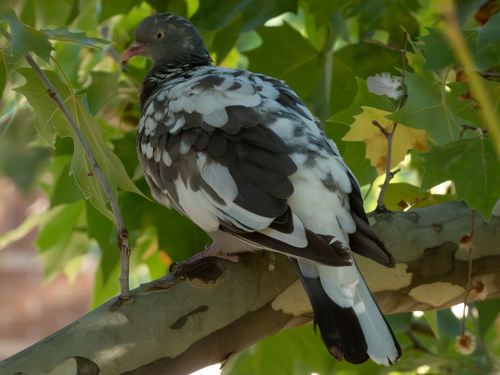
Similar species in Paris
Also recorded in
The same species elsewhere
Questions
House Sparrow in Paris
- Where can I see House Sparrow in Paris?
- House Sparrow has recent records at Jardin des Tuileries, Parc des Buttes-Chaumont, Parc de la Villette. Check each park page for habitat notes and access.
- When is the best time to see House Sparrow in Paris?
- Records peak in May, April, June. In November, activity is rated “possible”.
Sources
Occurrence counts and seasonality are derived from GBIF records (2018–2026). Description adapted from Wikipedia via iNaturalist, licensed CC BY-SA. Photo credits appear under each image. Native or introduced status comes from iNaturalist regional checklists. Species pages are for observation only — never disturb wildlife.