Black-headed Gull
Chroicocephalus ridibundus
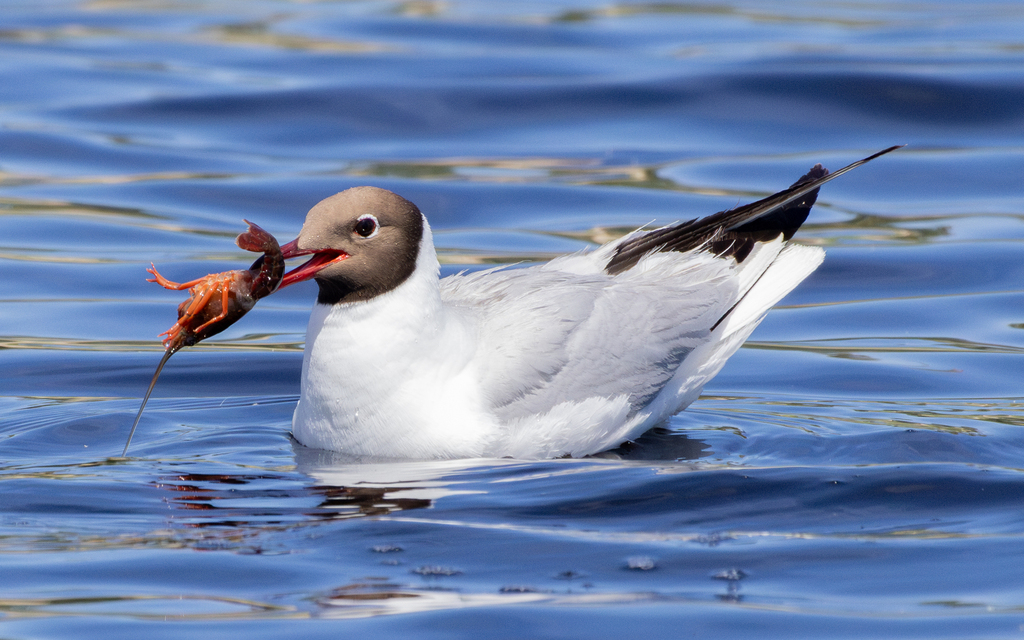
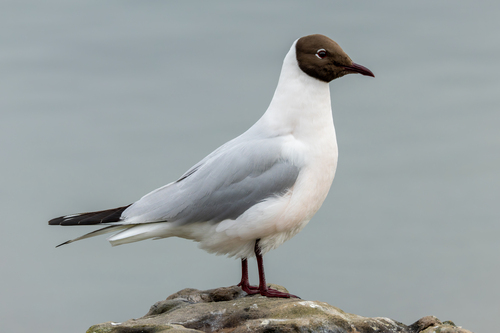
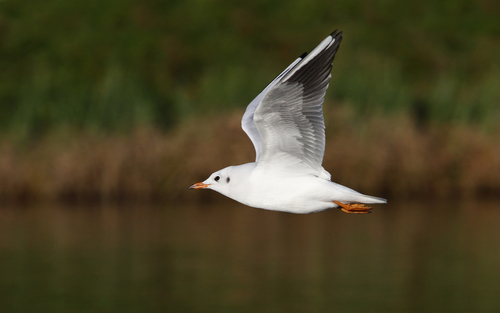
The black-headed gull (Chroicocephalus ridibundus) is a small gull that breeds in much of Europe and Asia, and also in coastal eastern Canada. Most of the population is migratory and winters further south, but some birds reside in the milder westernmost areas of Europe. Some black-headed gulls also spend the winter in northeastern North America, where it was formerly known as the common black-headed gull. As is the case with many gulls, it was previously placed...
- Family
- Laridae
- Order
- Charadriiformes
- Status
- Native in France
- Records
- 8,749
- Peak
- Dec · Jan · Nov
Seasonality
When it shows up
November: peak season
Where to look
Places with recent records
Formal garden, gravel, pond
Jardin des Tuileries
The long formal garden between the Louvre and Concorde — black redstarts, kestrels and a surprising number of passage migrants.
Formal garden, orchard, lawn
Jardin du Luxembourg
Chestnut avenues, an orchard and a central basin — one of the easiest places in Paris to watch woodpeckers and tits at work.
Woodland, lake, meadow
Bois de Vincennes
The eastern counterpart to Boulogne, with a lake, a flower park and long woodland edges that are rich in insects.
Canal-side park, meadows, planted gardens
Parc de la Villette
A modern park along the Canal de l’Ourcq, with rough grass, willow scrub and a good mix of waterside and open-country species.
Easy to confuse with
Similar species in Paris
Also recorded in
The same species elsewhere
Questions
Black-headed Gull in Paris
- Where can I see Black-headed Gull in Paris?
- Black-headed Gull has recent records at Jardin des Tuileries, Jardin du Luxembourg, Bois de Vincennes. Check each park page for habitat notes and access.
- When is the best time to see Black-headed Gull in Paris?
- Records peak in December, January, November. In November, activity is rated “peak season”.
Sources
Occurrence counts and seasonality are derived from GBIF records (2018–2026). Description adapted from Wikipedia via iNaturalist, licensed CC BY-SA. Photo credits appear under each image. Native or introduced status comes from iNaturalist regional checklists. Species pages are for observation only — never disturb wildlife.