Eastern Gray Squirrel
Sciurus carolinensis
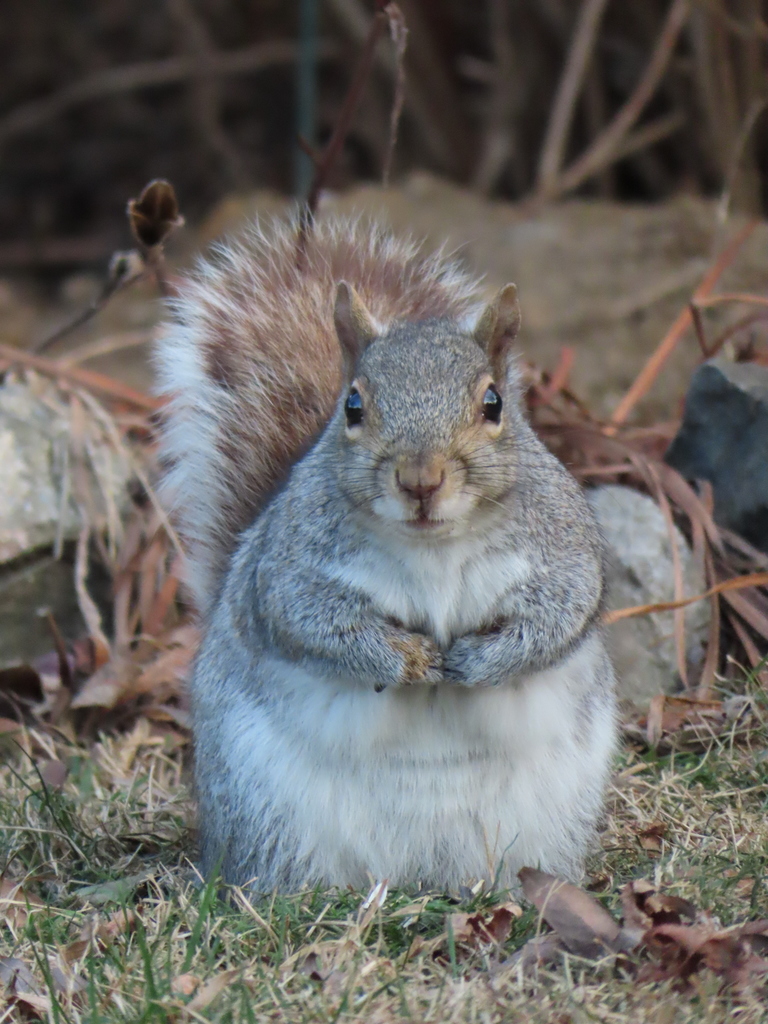
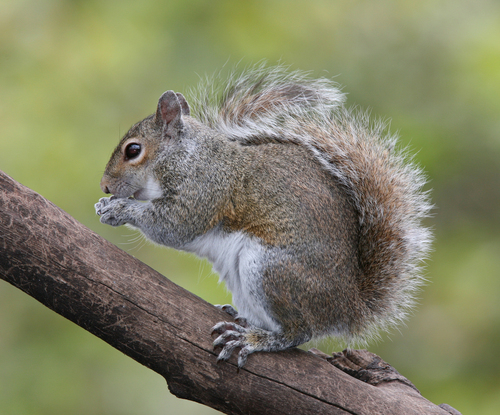
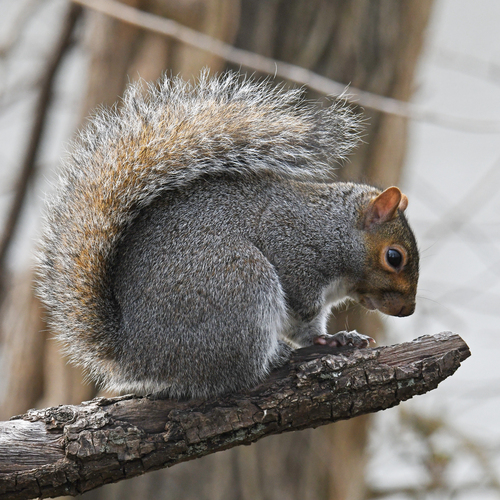
Grey-brown fur with a white belly and a long, bushy tail. In Britain it is the only widespread tree squirrel; in North America it can be grey or melanistic.
- Family
- Sciuridae
- Order
- Rodentia
- Size
- 38–52 cm including tail · tail 19–25 cm
- Records
- 13,439
- Peak
- Sep · Apr · Oct
How to recognise
What you are looking at
Grey-brown fur with a white belly and a long, bushy tail. In Britain it is the only widespread tree squirrel; in North America it can be grey or melanistic.
Typical size: 38–52 cm including tail · tail 19–25 cm
Habitat & behaviour
Where it lives
Mature woodland, parks and gardens with nut-bearing trees.
How it behaves
Caches nuts in scattered hiding places, runs along fences and branches, and scolds intruders from a safe perch.
Diet & timing
What it eats
Nuts, seeds, buds, shoots, fungi and the occasional bird egg.
When to look
Early morning and late afternoon, especially in autumn when caching.
Field tip
Watch the ground beneath a large tree: scattered shell fragments show where a squirrel has been feeding.
Seasonality
When it shows up
November: good chance
Where to look
Places with recent records
This species is recorded across New York City, but not consistently inside the parks we track. Try the nearest green space with similar habitat.
Also recorded in
The same species elsewhere
Questions
Eastern Gray Squirrel in New York City
- Where can I see Eastern Gray Squirrel in New York City?
- Eastern Gray Squirrel is recorded across New York City, but not consistently inside the parks tracked here. Try a green space with similar habitat.
- When is the best time to see Eastern Gray Squirrel in New York City?
- Records peak in September, April, October. In November, activity is rated “good chance”.
Sources
Occurrence counts and seasonality are derived from GBIF records (2018–2026). Description adapted from Wikipedia via iNaturalist, licensed CC BY-SA. Photo credits appear under each image. Native or introduced status comes from iNaturalist regional checklists. Species pages are for observation only — never disturb wildlife.