Eurasian Blue Tit
Cyanistes caeruleus
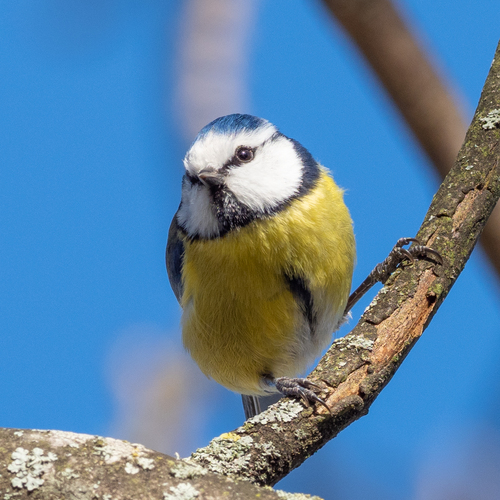
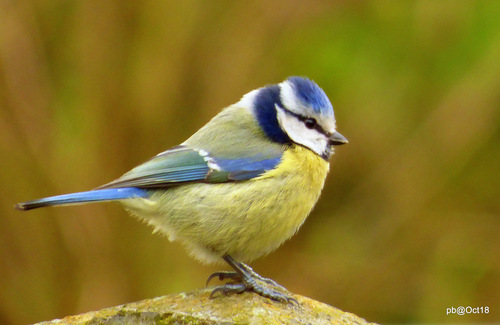
Blue crown and wings, yellow underparts, white face with a dark eye stripe. Smaller and more acrobatic than the great tit.
- Family
- Paridae
- Order
- Passeriformes
- Size
- 10.5–12 cm long · 17.5–20 cm wingspan
- Status
- Native in United Kingdom
- Records
- 115,632
- Peak
- Apr · Mar · Jan
How to recognise
What you are looking at
Blue crown and wings, yellow underparts, white face with a dark eye stripe. Smaller and more acrobatic than the great tit.
Typical size: 10.5–12 cm long · 17.5–20 cm wingspan
Habitat & behaviour
Where it lives
Woodland, parks, gardens and hedgerows with mature trees.
How it behaves
Hangs upside down on thin twigs and seed heads; joins mixed winter flocks with other tits and warblers.
Diet & timing
What it eats
Caterpillars, aphids, spiders and seeds; a regular visitor to hanging feeders.
When to look
All day; most visible in winter flocks and early spring when pairs inspect nest boxes.
Field tip
Look for movement at the tips of branches rather than the trunk — blue tits rarely sit still.
Seasonality
When it shows up
November: good chance
Where to look
Places with recent records
Ancient woodland, acid grassland, deer
Richmond Park
The largest of London’s royal parks: 2,500 acres of open grassland, veteran oaks and free-roaming red and fallow deer.
Woodland, ponds, rough grass
Hampstead Heath
A wild-feeling ridge of woods, ponds and meadows ten minutes from Zone 1, with one of the city’s richest bird lists.
Easy to confuse with
Similar species in London
Also recorded in
The same species elsewhere
Questions
Eurasian Blue Tit in London
- Where can I see Eurasian Blue Tit in London?
- Eurasian Blue Tit has recent records at Richmond Park, Hampstead Heath. Check each park page for habitat notes and access.
- When is the best time to see Eurasian Blue Tit in London?
- Records peak in April, March, January. In November, activity is rated “good chance”.
Sources
Occurrence counts and seasonality are derived from GBIF records (2018–2026). Description adapted from Wikipedia via iNaturalist, licensed CC BY-SA. Photo credits appear under each image. Native or introduced status comes from iNaturalist regional checklists. Species pages are for observation only — never disturb wildlife.