European Robin
Erithacus rubecula
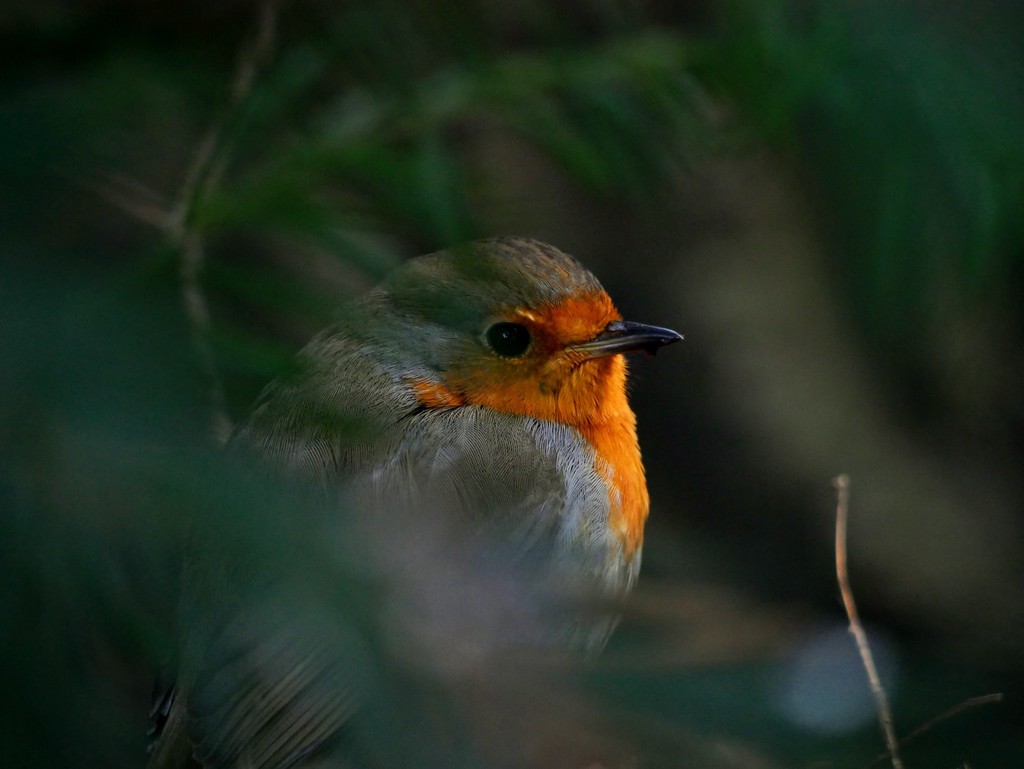
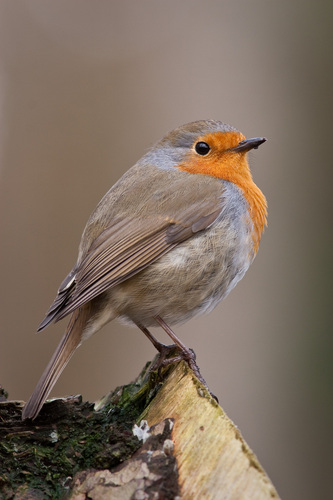
Orange-red face and breast, olive-brown upperparts and a pale belly. Adults have a soft grey border around the orange bib; juveniles are speckled brown all over.
- Family
- Muscicapidae
- Order
- Passeriformes
- Size
- 12.5–14 cm long · 20–22 cm wingspan
- Status
- Native in Germany
- Records
- 11,972
- Peak
- Apr · Mar · May
How to recognise
What you are looking at
Orange-red face and breast, olive-brown upperparts and a pale belly. Adults have a soft grey border around the orange bib; juveniles are speckled brown all over.
Typical size: 12.5–14 cm long · 20–22 cm wingspan
Habitat & behaviour
Where it lives
Gardens, hedgerows, park edges and woodland undergrowth, often within a few metres of people.
How it behaves
Highly territorial and unusually tame. Sings from low, exposed perches all year and follows gardeners for disturbed insects.
Diet & timing
What it eats
Insects, earthworms, spiders and berries; takes crumbs and mealworms from ground feeders.
When to look
Dawn and dusk, year-round. Winter song is one of the first sounds of the morning.
Field tip
Stand still beside a hedge for a minute or two — robins often appear to check you for food.
Seasonality
When it shows up
November: good chance
Where to look
Places with recent records
Parkland, lake, mature woodland
Tiergarten
The great central park of Berlin: broad avenues, a lake and dense old trees, with herons, woodpeckers and wintering goosander.
Open grassland, pioneer habitat, old runways
Tempelhofer Feld
A former airport turned into a vast open field — skylarks, wheatears and a surprising suite of dry-grass specialists in the middle of the city.
Pine forest, lakes, heath
Grunewald
Berlin’s largest forest, with sandy paths, quiet lakes and a breeding population of middle spotted woodpeckers.
Riverbank, mature trees, lawns
Treptower Park
A Spree-side park with old plane trees and a riverside promenade — easy access to waterfowl, grebes and riverside warblers.
Island woodland, meadows, historic park
Pfaueninsel
A small island in the Havel with ancient oaks, free-roaming peacocks and a remarkably quiet bird list.
Easy to confuse with
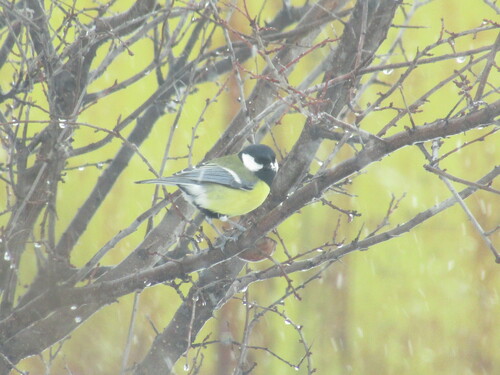
Similar species in Berlin
Also recorded in
The same species elsewhere
Questions
European Robin in Berlin
- Where can I see European Robin in Berlin?
- European Robin has recent records at Tiergarten, Tempelhofer Feld, Grunewald. Check each park page for habitat notes and access.
- When is the best time to see European Robin in Berlin?
- Records peak in April, March, May. In November, activity is rated “good chance”.
Sources
Occurrence counts and seasonality are derived from GBIF records (2018–2026). Description adapted from Wikipedia via iNaturalist, licensed CC BY-SA. Photo credits appear under each image. Native or introduced status comes from iNaturalist regional checklists. Species pages are for observation only — never disturb wildlife.