Grey Heron
Ardea cinerea
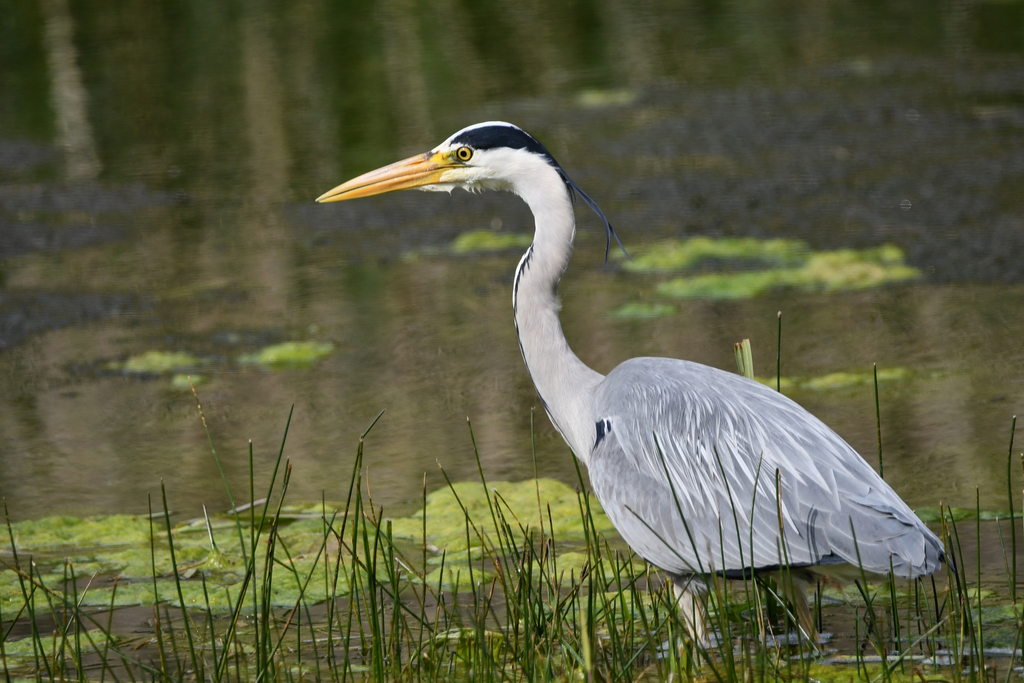
The grey heron (Ardea cinerea) is a long-legged predatory wading bird of the heron family, Ardeidae, native throughout temperate Europe and Asia and also parts of Africa. It is resident in much of its range, but some populations from the more northern parts migrate southwards in autumn. A bird of wetland areas, it can be seen around lakes, rivers, ponds, marshes and on the sea coast. It feeds mostly on aquatic creatures which it catches after...
- Family
- Ardeidae
- Order
- Pelecaniformes
- Status
- Native in Germany
- Records
- 10,735
- Peak
- May · Apr · Mar
Seasonality
When it shows up
November: good chance
Where to look
Places with recent records
Parkland, lake, mature woodland
Tiergarten
The great central park of Berlin: broad avenues, a lake and dense old trees, with herons, woodpeckers and wintering goosander.
Pine forest, lakes, heath
Grunewald
Berlin’s largest forest, with sandy paths, quiet lakes and a breeding population of middle spotted woodpeckers.
Riverbank, mature trees, lawns
Treptower Park
A Spree-side park with old plane trees and a riverside promenade — easy access to waterfowl, grebes and riverside warblers.
Island woodland, meadows, historic park
Pfaueninsel
A small island in the Havel with ancient oaks, free-roaming peacocks and a remarkably quiet bird list.
Lake, reedbed, forest edge
Müggelsee
Berlin’s largest lake, fringed by reedbeds and forest — a strong spot for grebes, terns and autumn migration.
Easy to confuse with
Similar species in Berlin
Questions
Grey Heron in Berlin
- Where can I see Grey Heron in Berlin?
- Grey Heron has recent records at Tiergarten, Grunewald, Treptower Park. Check each park page for habitat notes and access.
- When is the best time to see Grey Heron in Berlin?
- Records peak in May, April, March. In November, activity is rated “good chance”.
Sources
Occurrence counts and seasonality are derived from GBIF records (2018–2026). Description adapted from Wikipedia via iNaturalist, licensed CC BY-SA. Photo credits appear under each image. Native or introduced status comes from iNaturalist regional checklists. Species pages are for observation only — never disturb wildlife.